Personalizing the Sacred
Objects of meaning from Tucson Community's Rabbis
This exhibit introduces rabbis from across Tucson by sharing an object of significance to their spiritual practice. An object’s power lies in its daily use as well as its origin. The story behind each rabbi’s selection, from tefillin to a lithograph, connects symbols of Jewish traditions to valuable personal experiences.
Participating rabbis provide an object that inspires and informs their rabbinic practice along with a short text that describes their relationship to the belonging.
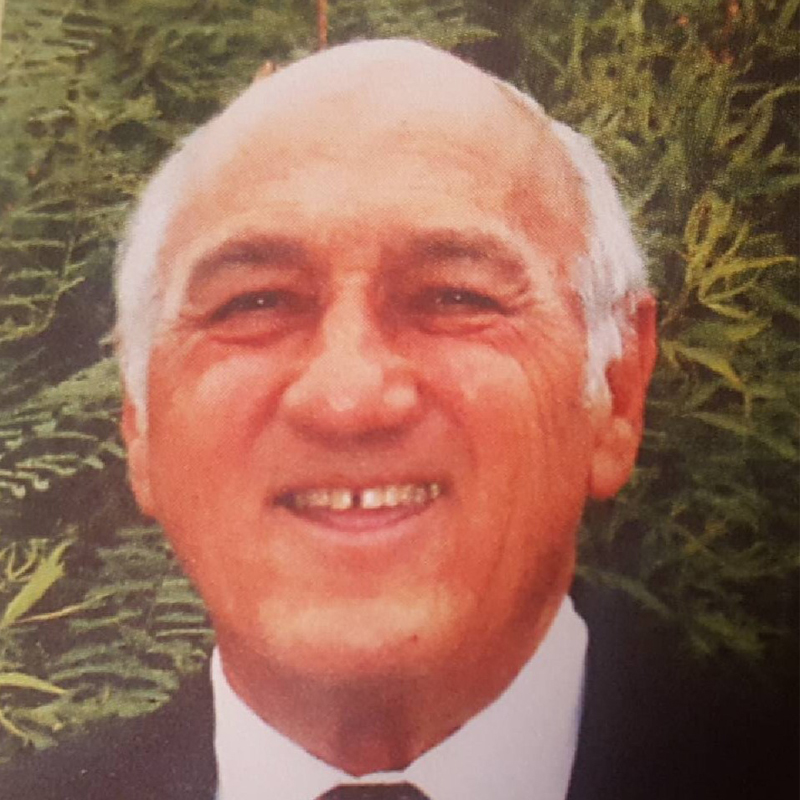
Rabbi Lee A. Kivel was a graduate of NYU and Rabbinical School. He served as a rabbi for 17 years before retiring to Tucson where he was involved in the family business of commercial real estate which included Park Mall, El Con Mall and many other businesses. He was a great supporter of the School of Theater, Film and Television at the University of Arizona. Rabbi Kivel loved opera and enjoyed Broadway musicals, theater, movies and all of the arts. He was the author of the childrens’ book, “The Lonely Train.” He loved to travel, was an avid reader and worked crossword puzzles with an ink pen. Rabbi Kivel was a member of Congregation Anshei Israel and Congregation Chofetz Chayim.
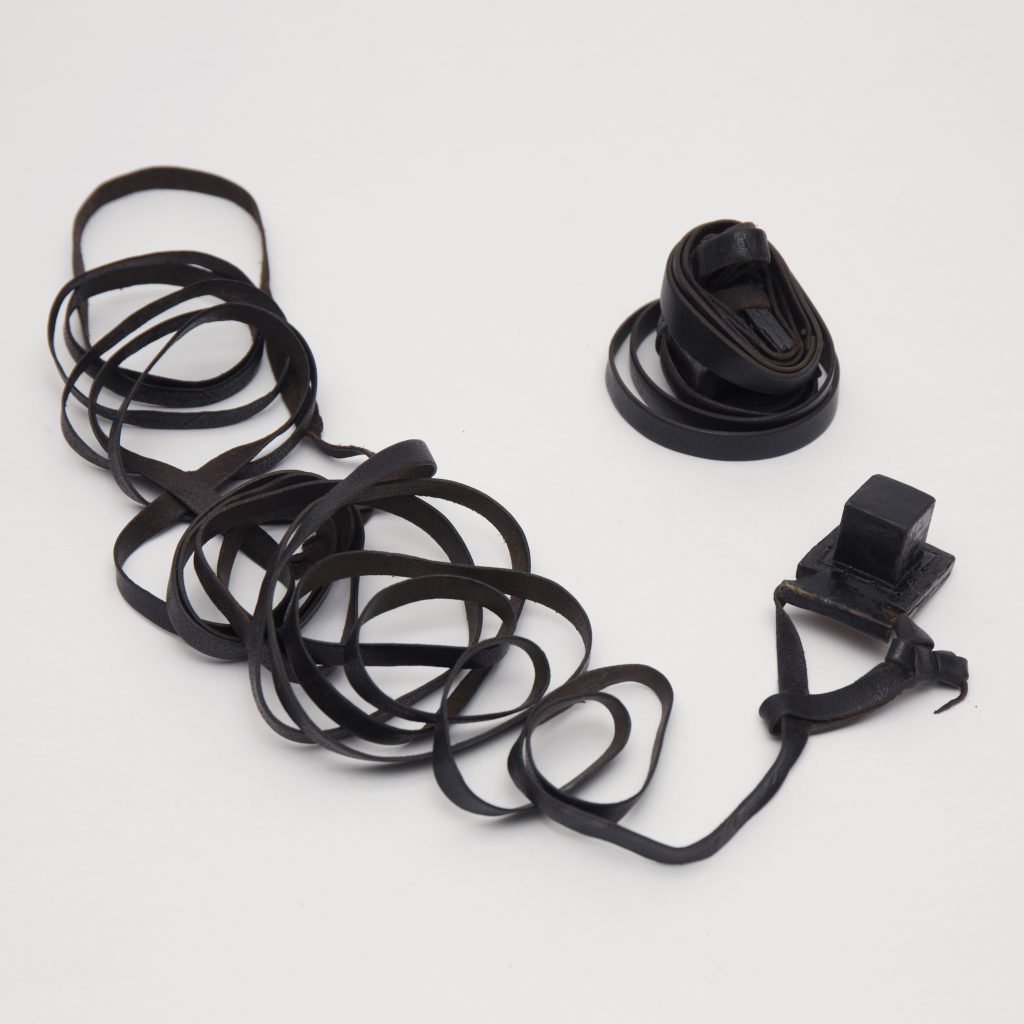
Tefillin, ca. 1900 Before a person can decide to become a rabbi, first that soul must choose to hold fast to being Jewish. The fact that I was born a Jew was as mysterious to me as the folded leather straps kept in the top drawer of our dining room credenza. These foreign objects called t'filin (also spelled tefillin), I am told, were brought to America by my great-grandfather perhaps in 1901. They caught my curiosity. Though nobody in my close family maintained the mitzvah of donning t'filin; these sacred objects called out to me. When I first saw a rabbi wrapped in his t'filin, I realized that his t'filin were like these t'filin, only mine were no longer in use. Little did I know by the age of 19, I would find myself wearing my own set, each morning. Little did I know I would help many others to reclaim their heritage, too. -Rabbi Hazzan Avraham Alpert
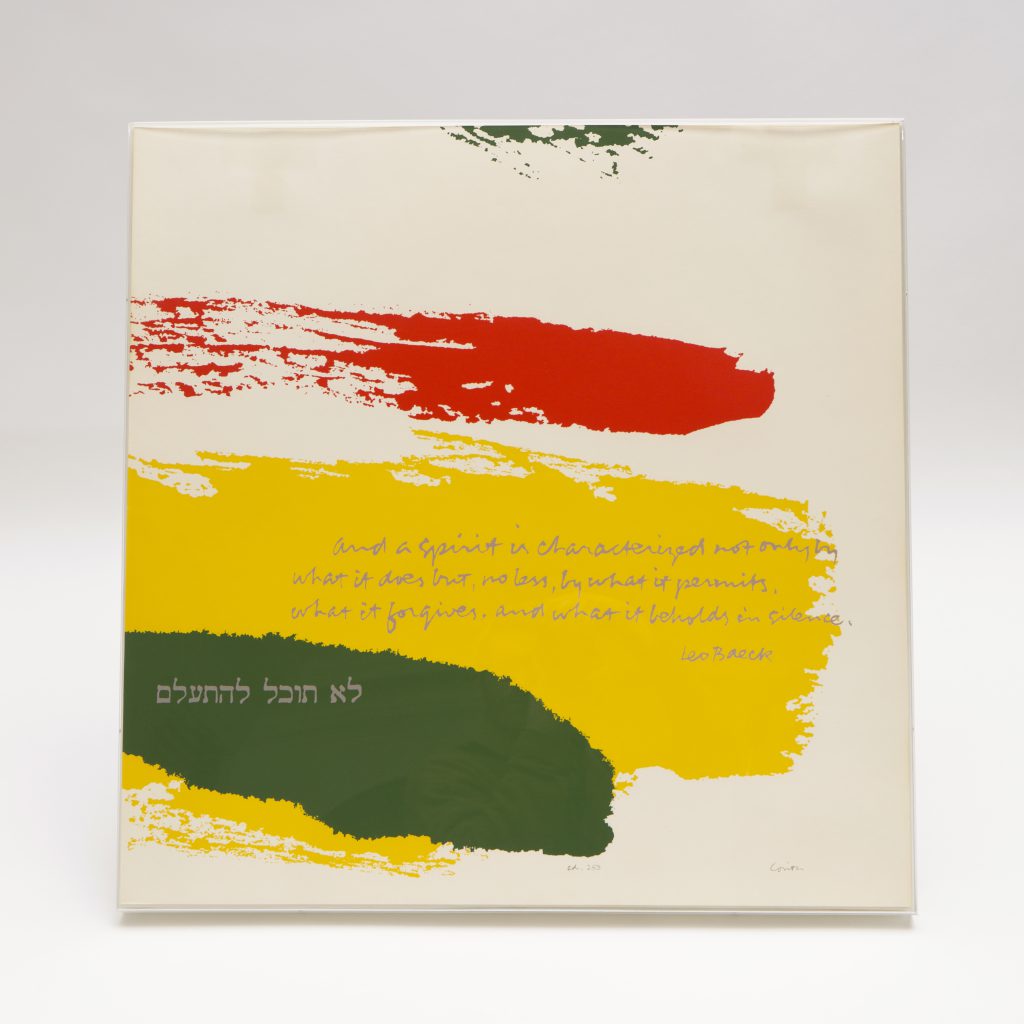
Sister Mary Corita Lithograph Leo Baeck Temple in Los Angeles, commissioned Sister Mary Carita-a Roman Catholic nun and an artist, to create a piece of art for them. She paired Rabbi Baeck’s quote about what embodies the spirit of each individual with a verse from Deuteronomy 22:3, לֹא תוּכַל לְהִתְאַלֵּם, "You must not remain indifferent." An Israeli translated this for me as, "You must not disappear." Rabbi Leo Baeck (1873-1956) refused several opportunities to flee Germany, stating: I will go when I am the last Jew alive in Germany. For those who endured the Holocaust with him at Theresienstadt, Rabbi Baeck was a heroic model of the human capacity to rise above the most degrading experiences. This piece of art is a constant reminder of a rabbi whose decency, compassion, intelligence, courage and gentle manner affirmed a spirit of humanity which continues to inspire and motivate my work in our community. -Rabbi Thomas A. Louchheim
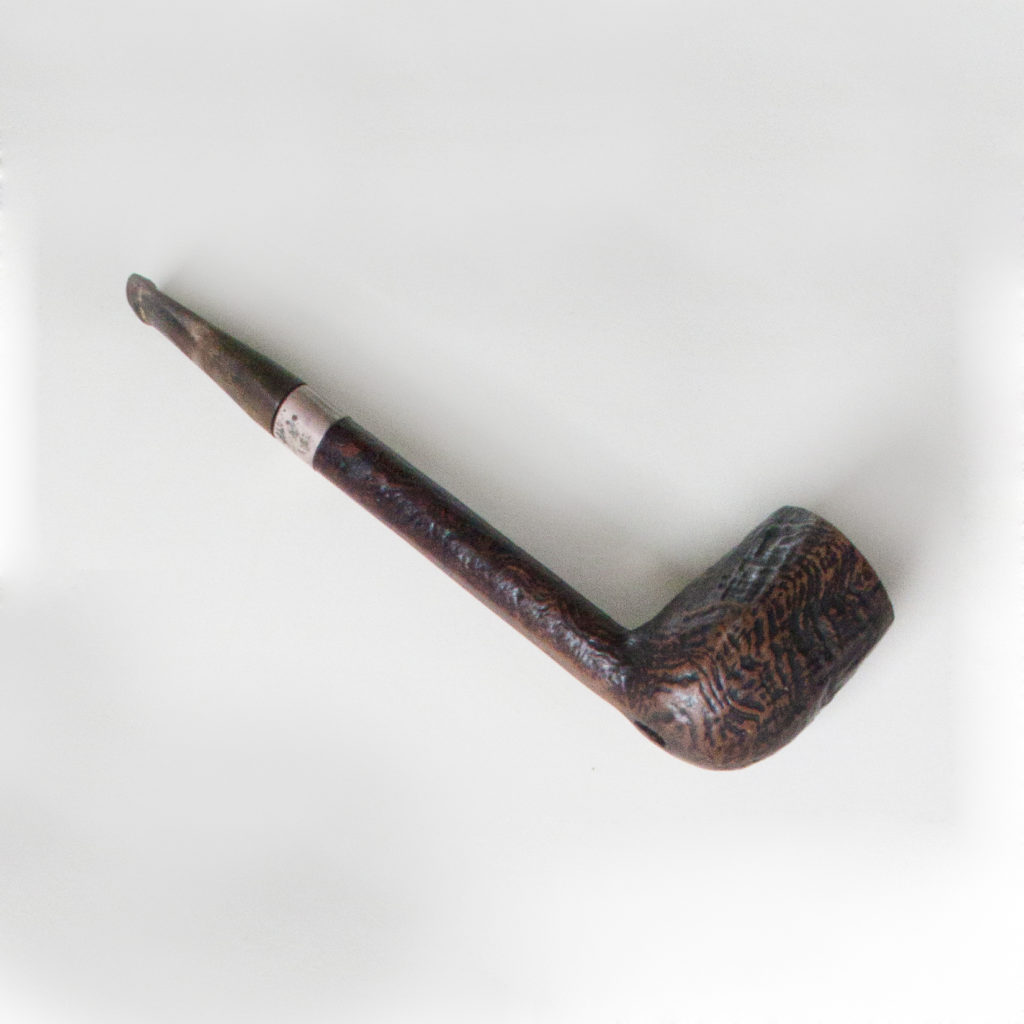
Tobacco Pipe Rabbi Joseph H. Gumbiner (1907-1993) was a civil rights activist and spiritual leader, and was Temple Emanu-El’s rabbi from 1942-1947. He was rarely seen without one of these pipes, including during lectures. Under Gumbiner’s leadership, Temple Emanu-El’s congregation expanded from 28 to 200 families. This expansion led the congregations to begin fundraising and planning for a new, more accommodating structure. Gumbiner was a critic of endemic racism throughout the United States, including in Tucson. He promoted inter- religious dialogue on the issue. Yet, some congregation members considered his perspective and outspokenness to be radical. Some were particularly concerned that Gumbiner permitted the National Urban League to use the temple for meetings, while others did not approve of his support of the Progressive party in 1948.
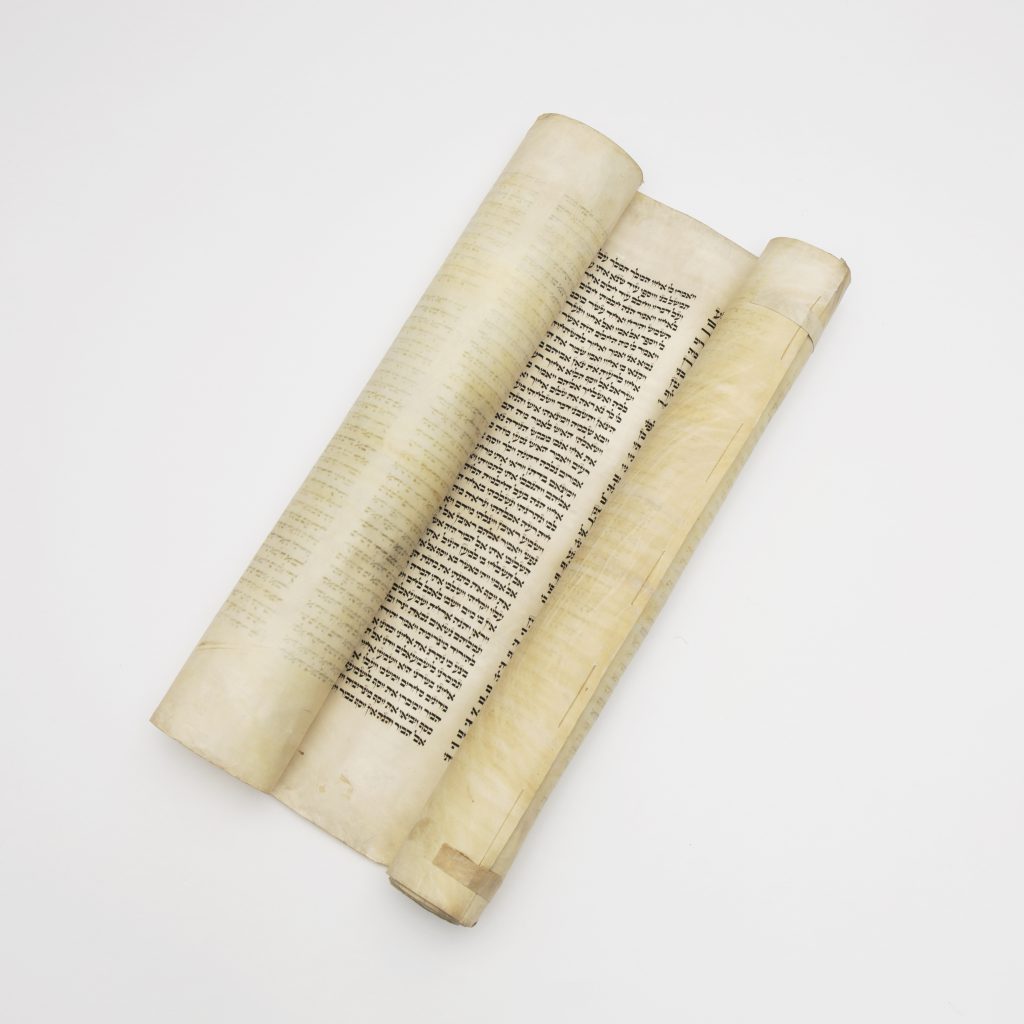
Torah Scroll On a street in Warsaw, in the spring that followed 9/11, I gathered with a group of teenagers, to board a bus to Auschwitz-Birkenau. Suddenly, a fellow adviser in our group came running towards us, having just seen a Sefer Torah burned and bruised, slumped in the window of an 'antique' shop. We let out a collective gasp, then resolved to buy the scroll; each of the 62 of us contributed. Both scrolls were badly burned, resulting in fragments to be cared for. Each survivor who journeyed with us carried a scroll back to the US and their home communities. I returned with this fragment of a scroll, which is before you now. I wrapped this piece of Torah in a tallis; its Aron HaKodesh, its Holy Ark. When I ultimately had the courage to open it; I did so with my daughter, Naomi, beside me. Her bat mitzvah portion was there before us in the fragment. Her older brother, Joshua, shared the same portion, two years apart. In this fragment was also written our youngest son, David's, Torah portion and he read from it in his bar mitzvah. With every breath I take, this fragment reminds me of the life of our people, we Jews, beyond the Shoa; the vibrant life that I strive to nourish and sustain every day as a rabbi. It reminds me that my n'shamah, my soul, has taken a vow to stand up against prejudice, bigotry, violence and hatred anywhere, everywhere, always. This is a huge part of who I am as a rabbi; who I am as a human being. -Rabbi Stephanie Aaron
Seder plate After high school I was not actively involved in Jewish life for several decades, except for an occasional Passover seder with my parents and other family members. My husband was not Jewish and my kids were being raised with no particular religious identity. After my divorce I began dating a Jewish man and my interest in Judaism was awakened. One year as Passover approached he suggested we have a seder-he and his son, my two kids and me. The day before the seder, in a bit of a panic, I found a Jewish gift store and bought this seder plate and five haggadahs (books read during the Passover seder). Years passed and my involvement with Judaism grew, eventually leading me to become a Rabbi. This seder plate, which I still use every year, is a loving reminder of my first step on this journey. -Rabbi Helen Cohn

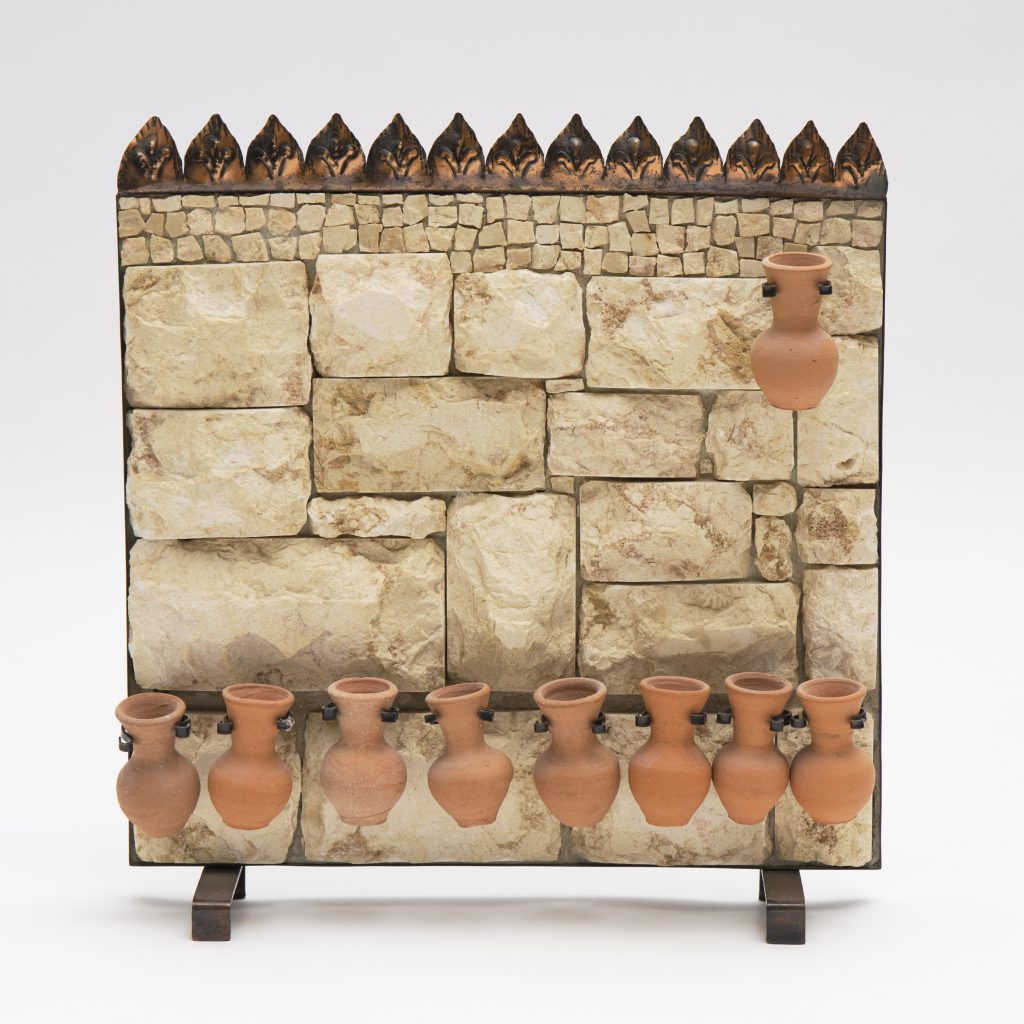
Hanukkah Menorah This Hanukkiah (circa 1969), purchased in Jerusalem and featuring a mosaic of the Kotel, is made out of Jerusalem stone and reflects on the Six Day War post-1967. The essence of Hanukkah is a celebration of the biblical restoration of the Temple and a prayer that it might once again be restored. By choice, the Eisen family has never used this Menorah-seeing it not as an art piece, but as a symbol of what might yet be, as our family hopes and waits for the day when there is peace and Israel fulfills its role as Reishit Tzimchat Ge'ulateinu, or the flowering of our redemption. -Rabbi Robert Eisen
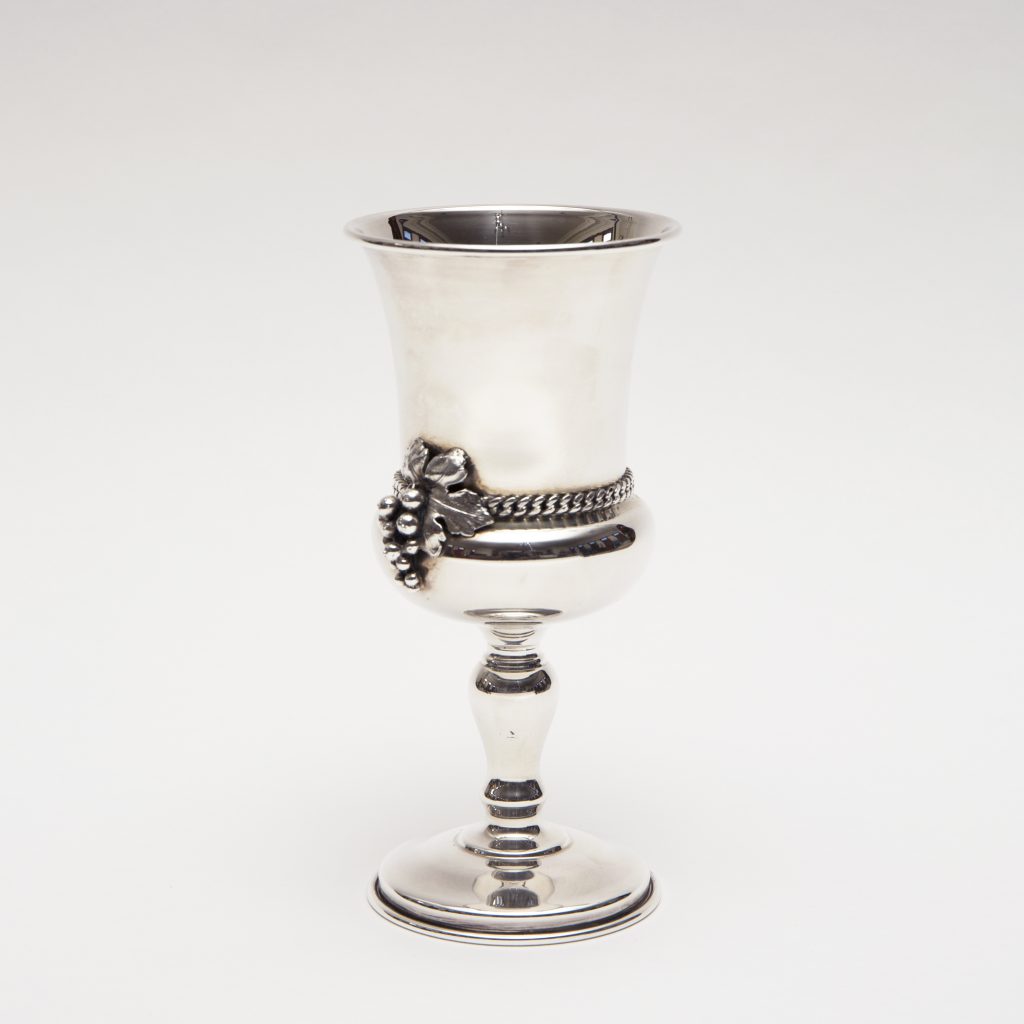
Kiddush Cup This very large and beautiful Kiddush cup is composed of sterling silver and measures 7 1/2 inches tall, 3 1/2 inches wide at the top. Around one side of the cup is a decorative band of silver grapes. On the bottom of the cup is the following inscription, "Rabbi Arthur Oleisky, with love and admiration on your silver anniversary, as spiritual leader, of Congregation Anshei Israel, Jan. 13, 1996." The cup has great meaning to me as if was a gift from the congregation. It stands with a spice box and a candle holder for use at Havdalah. -Rabbi Arthur Oleisky
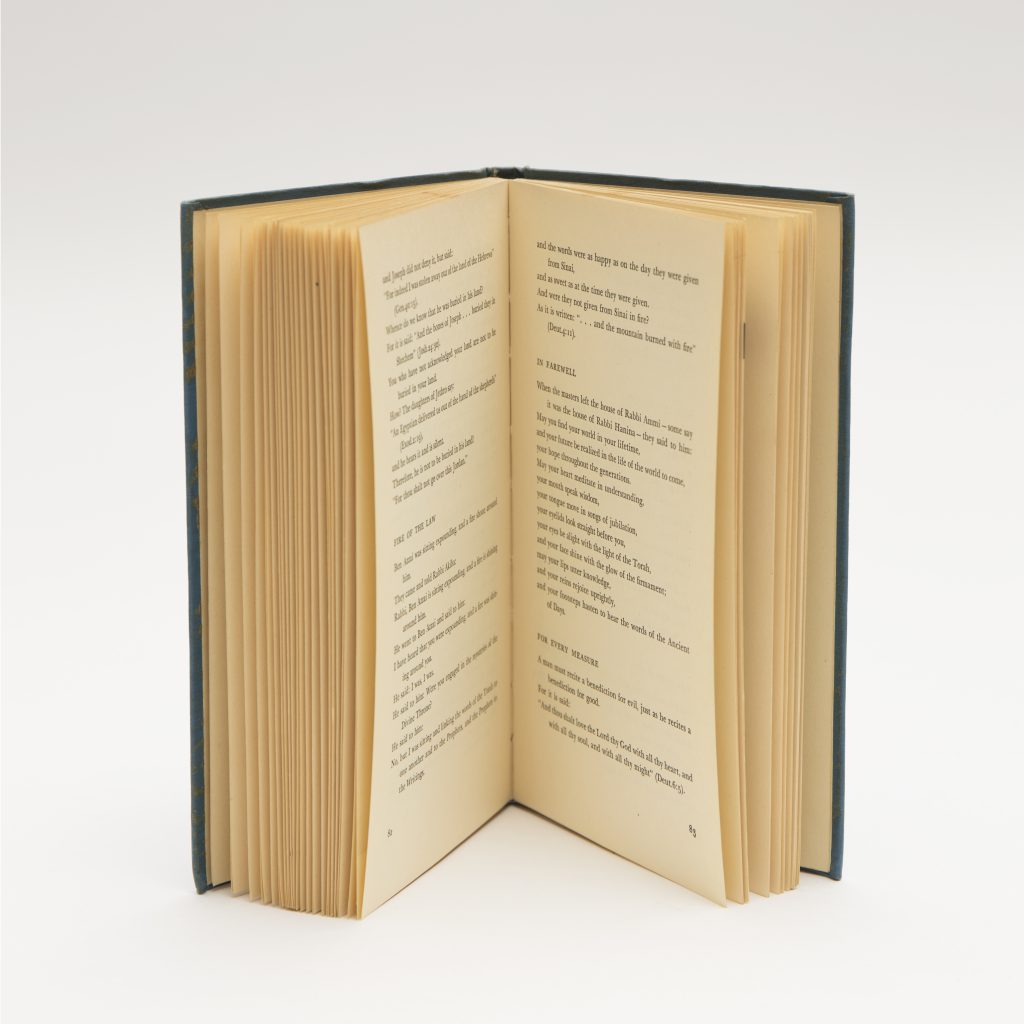
Hammer on the Rock: A Midrash Reader This is the very first book of Midrash (rabbinic explanations through stories) that I ever received. I won it in Mrs. Asia’s 7th Grade class on a day when we were seeing who can answer the most questions. I wasn’t thrilled to receive a book, but as I read it, I very much enjoyed all of the texts. I have marked the story of Rabbi Eliezer and the Oven of Akhnai, a story about Torah being given to us to interpret outside of its heavenly origins. I teach this story any chance that I get. -Rabbi Batsheva Appel
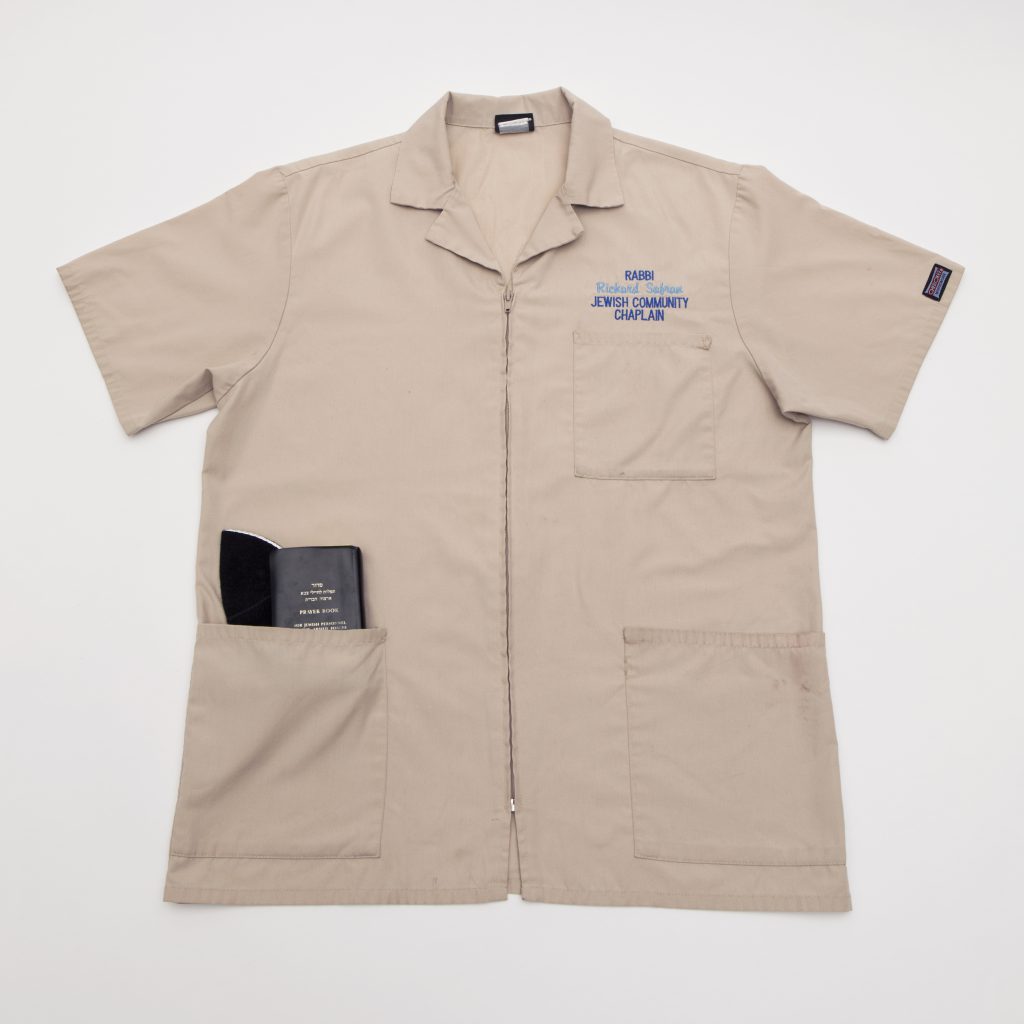
Chaplain’s Vest Jewish military chaplains were first appointed during the civil war and moved into other areas of service to the Jewish community in the following decades, especially after WWII. Noting the use of chaplains in other areas of community work by their neighbors, Jewish community leaders began to see how Jewish chaplains could also serve the spiritual and psychological needs of their people in hospitals, nursing homes, mental health facilities, prisons and other institutions. By the 1980s chaplains and boards of rabbis worked together to establish an organization that would bring together Jewish chaplains of all religious groupings and to set up an effective pastoral care, education, training, and certification curriculum, which is now Neshama: Association of Jewish Chaplains. I was the Tucson community chaplain from 2005-2017. I am a board certified chaplain and a member of Neshama. -Rabbi Richard Safran
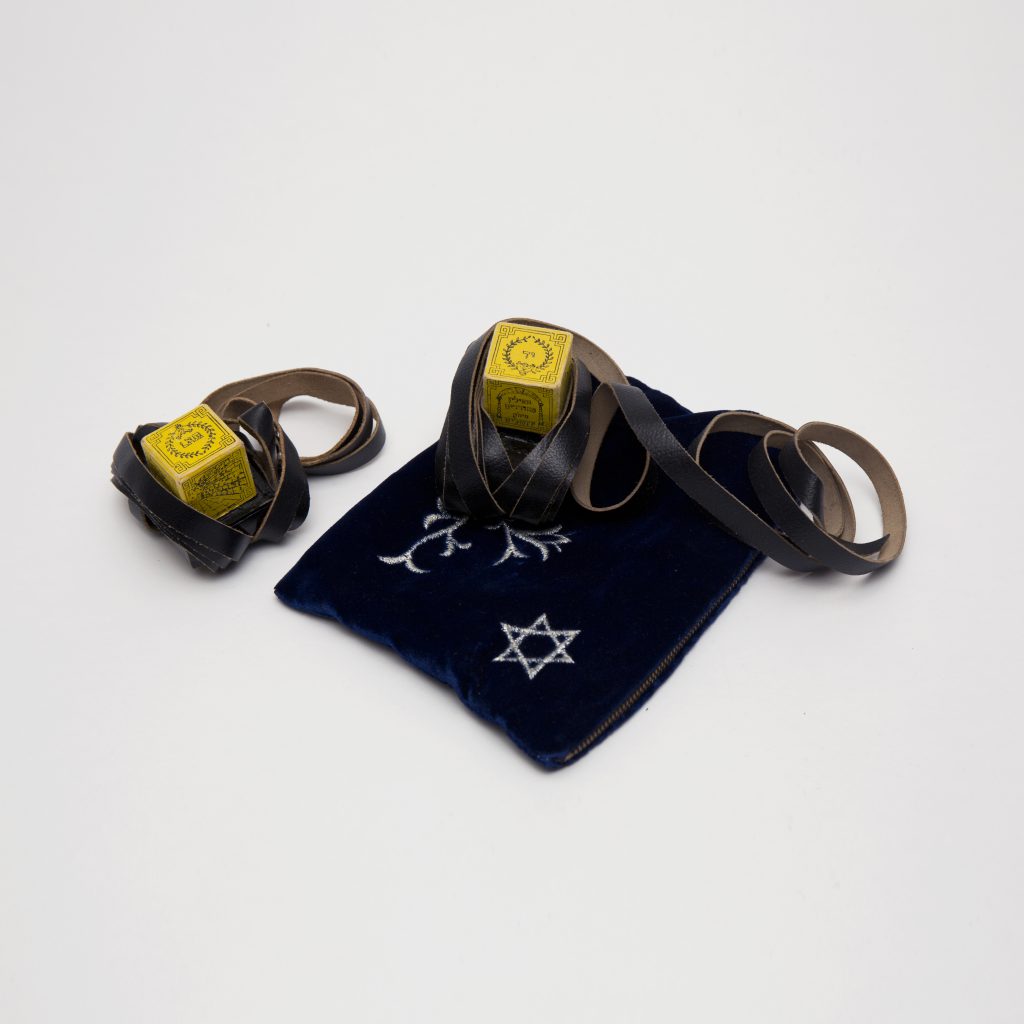
Tefillin This precious pair of Tefillin belonged to a Jew here in Northwest Tucson, who's wife donated the pair to me after his passing. These Tefillin were dearly wrapped upon his arms, and they were preserved carefully over the years. As a Chabad Rabbi, Tefillin are very precious to me, as they represent the love one Jew has for another. Empowered by the message of Rabbi Schneerson of Chabad Lubavtich, to share the Mitzvah of Tefillin with every Jew, I carry a pair with me at all times. I have had the opportunity to help lay Tefillin on enthusiastic young boys experiencing them for the first time. I have encouraged businessmen to don Tefillin, who last wore them at their Bar Mitzvah and who are surprised how the words of the prayers roll off their tongue. I have delicately wrapped the leather straps on the arms of elder men, who recite the Sh'ma with tears in their eyes and memories of the lifetime ago when they have last encountered Tefillin. -Rabbi Ephraim Zimmerman
Babylonian Talmud Talmud was one of the first subjects we learned in the elementary school of Chabad in Montreal, Canada. As a youngster, the condensed format of the pages was a daunting sight. Studying them was even more taxing. These scholarly conversations of the Jewish sages between 200 and 500 CE abruptly switch back and forth between Mishnaic Hebrew and Babylonian Aramaic. The conversations include quotations and commentary, questions and answers, legalities and stories, facts and legends. My handwritten notes from grade 6 were an adolescent attempt to make sense of it all. I found them after resolving to complete the study of the entire Talmud by the age of 50. While the text remains daunting, that feeling is overpowered by a fascination with and appreciation for the depth of knowledge within the Talmud's 2,711 pages. A cherished compliment is to have a "Gemara Kop" - a sharp Talmudic mind. I might achieve that one day. -Rabbi Yehuda Ceitlin
